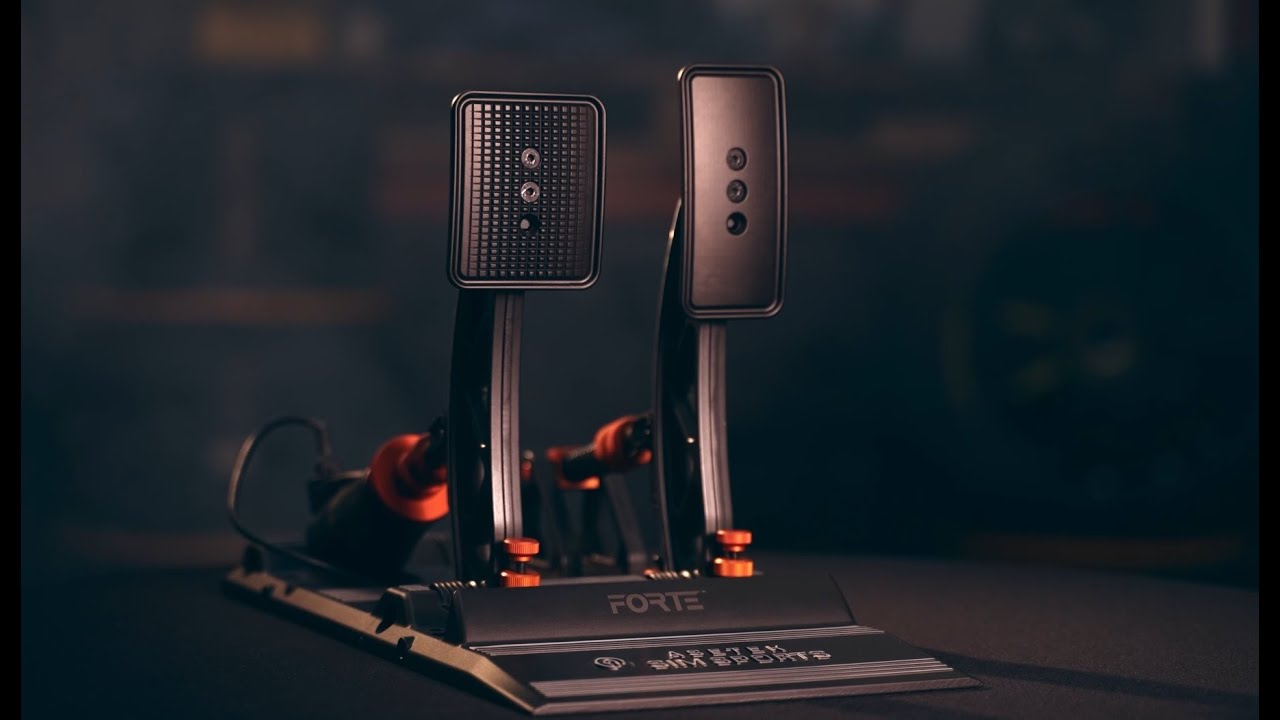
Unlock Your True Potential: Why Load Cell Brake Pedals are the Ultimate Sim Racing Upgrade
In the exhilarating world of sim racing, every millisecond counts, and every input matters. While a powerful wheel and a responsive screen are crucial, one often overlooked component holds the key to unlocking consistent lap times and unparalleled control: your brake pedal. For far too long, many sim racers have settled for traditional, distance-based pedals, unknowingly hamstringing their performance. It's time to upgrade. Welcome to the era of load cell pedals sim racing – the definitive enhancement that transforms your virtual driving experience.
The difference between a good sim racer and a great one often comes down to braking. In real cars, especially performance vehicles, braking isn't about how far you push the pedal, but how much force you apply. Load cell brake pedals ingeniously replicate this critical real-world sensation, measuring pressure rather than travel. This seemingly simple change revolutionizes your control, consistency, and ultimately, your lap times. If you're serious about taking your sim racing to the next level, understanding and implementing load cell technology is not just an option, it's a necessity.
What Exactly Are Load Cell Pedals and How Do They Work?
At its core, a load cell pedal converts the physical force you exert into a precise electrical signal. Unlike conventional potentiometer-based pedals that simply measure the distance the pedal arm travels, load cell technology focuses on the actual pressure applied. Imagine stepping on a sophisticated digital scale – it doesn't care how far your foot moves, only the weight (force) it senses. This is the fundamental principle behind load cell pedals sim racing.
The magic happens inside the load cell itself, which typically contains one or more strain gauges. When pressure is applied to the brake pedal, the load cell deforms ever so slightly. These minute deformations are detected by the strain gauges, which then convert them into an electrical signal. The stronger the pressure, the greater the deformation, and the higher the voltage of the electrical signal. This signal is then interpreted by your sim racing software to accurately determine the amount of braking force you're applying.
This technology isn't new; load cells are ubiquitous in modern measurement systems, from the scales used to weigh deli meats to industrial sensors measuring the weight of tractor trailers. Their widespread use underscores their reliability and precision. By integrating this proven technology into sim racing brake pedals, manufacturers have provided a pathway for enthusiasts to experience braking fidelity previously reserved for professional setups or real race cars.
The Transformative Advantages of Load Cell Pedals for Sim Racers
Switching to load cell pedals sim racing isn't just a minor tweak; it's a fundamental shift that impacts every aspect of your driving. Here’s why they are considered the ultimate upgrade:
Unparalleled Precision and Consistency
- Muscle Memory Development: The most significant advantage. With distance-based pedals, your brain tries to memorize a pedal position, which can vary slightly due to fatigue, seating position, or even shoe type. Load cell pedals allow you to build muscle memory around a specific *force* level. This is far more natural and repeatable for your body, leading to incredibly consistent braking points lap after lap. You'll instinctively know how hard to press for 50%, 70%, or 100% braking.
- Elimination of Potentiometer Issues: Traditional pedals can suffer from "dead zones" or inconsistent readings as potentiometers wear out. Load cells are far more durable and maintain their accuracy over time, eliminating these frustrating inconsistencies.
- Predictable Braking: The direct correlation between force applied and braking effect means no more guessing. The more force you apply, the stronger the braking, just like in a real car. This predictability empowers you to push the limits with confidence.
Enhanced Realism and Performance
- Authentic Braking Feel: Real race cars respond to pressure. Load cell pedals replicate this progressive feel, giving you a more immersive and realistic experience. You'll feel the braking pressure build up, allowing for nuanced control.
- Superior Trail Braking: Trail braking – the art of progressively releasing the brakes as you turn into a corner – becomes infinitely easier and more precise with load cell pedals. The ability to finely modulate braking force allows for smoother corner entry, better rotation, and faster mid-corner speeds. This skill, critical in real racing, is truly unlocked in the sim with load cells.
- Improved Lap Times: More consistent braking leads to more consistent corners, which in turn leads to faster and more repeatable lap times. It's a direct route to significant performance gains on track. For a deeper dive into how this technology can redefine your racing, explore Transform Your Sim Racing: The Power of Load Cell Pedals.
Customization and Longevity
- Tunable Resistance: Many high-quality load cell pedals offer customizable resistance options, often through interchangeable springs or elastomers. This allows you to fine-tune the pedal's stiffness and feel to perfectly match your preference, racing discipline, or even simulate different car types.
- Durability and Low Maintenance: Compared to some other advanced pedal types, load cell systems are generally very robust and require minimal maintenance, making them a hassle-free option for dedicated sim racers.
Choosing Your Load Cell Pedals: What to Look For
Ready to make the switch? Here are key considerations when selecting your load cell pedals sim racing setup:
- Max Force Rating (kg/lb): Load cell pedals come with varying force ratings (e.g., 50kg, 100kg, 200kg). A higher rating generally means greater durability and the ability to withstand more pressure, often leading to a more realistic "stiff" brake feel preferred by many. Consider your personal preference and how hard you like to brake.
- Build Quality and Materials: Look for pedals constructed from robust materials like aluminum, steel, or high-grade composites. Durability ensures longevity and consistent performance under intense use.
- Customization Options: Check for interchangeable springs, elastomers, or adjustable pedal angles. The ability to fine-tune the feel is a major benefit.
- Software Calibration: Good software allows for precise calibration of dead zones, sensitivity curves, and even provides telemetry feedback to help you optimize your braking technique.
- Compatibility: Ensure the pedals are compatible with your existing sim racing rig, wheelbase, and preferred racing titles.
- Budget: Load cell pedals range from entry-level upgrades to high-end, professional-grade systems. Set a budget, but remember that this is an investment in your sim racing performance.
Load Cell vs. Hydraulic Pedals: A Quick Comparison
While load cell pedals offer incredible realism and performance, it's worth noting the existence of hydraulic pedals, which aim for even greater fidelity by using fluid-based resistance to mimic real car braking systems. Hydraulic pedals often provide the most realistic progressive feel, making them ideal for those seeking the closest possible real-world mirror. However, they typically come at a higher price point and may require more maintenance. For an in-depth comparison to help you make the best decision for your setup, be sure to read Load Cell vs Hydraulic Pedals: Which Sim Racing Choice is Best?
Installation, Setup, and Mastering Your New Pedals
Once you've chosen your new load cell pedals, proper installation and setup are crucial:
- Secure Mounting: Due to the force you'll be applying, firmly mounting your pedals to a solid rig or pedal plate is paramount. Flexing pedal plates or unstable setups will compromise consistency and feel.
- Software Calibration: Follow the manufacturer's instructions to calibrate your pedals. This usually involves setting the minimum and maximum brake pressure points to ensure the full range of the load cell is utilized.
- Adjusting Resistance: Experiment with different springs or elastomers (if available) to find the pedal stiffness that feels most natural and controllable to you. There's no "right" setting; it's all about personal preference.
- Practice, Practice, Practice: Adapting to force-based braking takes time. Spend dedicated sessions focusing purely on braking technique, developing that crucial muscle memory. Start by consistently hitting your max braking point, then work on modulation for trail braking.
Conclusion: Elevate Your Sim Racing Experience
The journey to becoming a faster, more consistent sim racer is paved with smart upgrades, and few offer the transformative impact of load cell pedals sim racing. By shifting from measuring distance to measuring true force, you gain unparalleled precision, develop rock-solid muscle memory, and experience a level of realism that elevates every virtual lap. This isn't just about spending money; it's about investing in your skill, your immersion, and your passion for sim racing. Make the upgrade today and feel the difference – your lap times will thank you.